In 2008, a proposal for a new kind of digital money appeared online. What if people could send money directly to each other, without a bank handling the payment?
A year later, Bitcoin launched – a digital currency that isn’t issued by a central bank. In 2010, American programmer Laszlo Hanyecz paid 10,000 bitcoins for two pizzas – at bitcoin’s closing price on 14 October 2026, that amount would have been worth around $816 million.
The purchase became a milestone in Bitcoin’s history. Every year on May 22, the crypto community celebrates Bitcoin Pizza Day, marking one of the earliest documented purchases made using bitcoin.
What is Bitcoin?
Bitcoin is a digital currency and a type of crypto-asset, which exists only in digital form, so there are no physical coins or banknotes. And while you can buy and hold bitcoin, owning it doesn’t give you a stake in a company, as shares do.
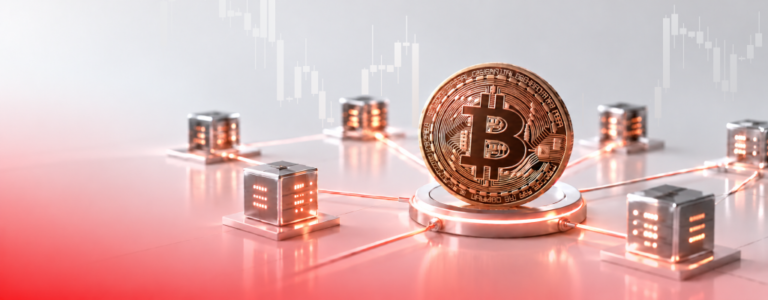
This digital currency isn’t issued by a central bank or controlled by a single company. Instead, it relies on a network of computers run by people around the world. The network uses cryptography – mathematical techniques that help verify transactions and keep them secure.
Bitcoin uses a peer-to-peer system, which means people can send bitcoin directly to each other, without having to go through a bank.
How does Bitcoin work?
When you transfer money through a bank, it records the payment and updates your account balance.
Bitcoin works differently. Instead of a bank keeping the records, computers around the world hold copies of the same digital record of transactions. This shared record is called the blockchain.
When someone sends bitcoin, the network checks that the sender can spend it and isn’t trying to use the same bitcoin twice. If the transaction passes these checks, it can be added to the blockchain.
Why do people buy or use Bitcoin?
Some people use bitcoin to transfer value, including across borders. Others are interested in the technology itself and the idea of a financial system that doesn’t depend on a central authority. And some treat bitcoin as an investment, purchasing it in the hope that its price will go up.
What risks should beginners understand?
Price volatility
Bitcoin’s price can rise or fall sharply – sometimes within hours or even minutes. If you invest in it, you could lose some or all of your money.
Storage and access
To manage bitcoin, you can use a crypto wallet – an app or device that lets you access and transfer your bitcoin – or a crypto exchange that holds it on your behalf. Losing access to your wallet or trusting an unreliable exchange could mean losing your funds.
Scams
Bitcoin’s popularity also attracts scammers. Some create fake investment platforms, while others pretend to represent legitimate companies. Promises of guaranteed returns are another warning sign.
Three things to remember
- Bitcoin is a digital currency that isn’t issued by a central bank.
- Bitcoin transactions are recorded on a blockchain, with copies of the record held by computers around the world.
- Understanding Bitcoin is a useful first step, but it’s also important to recognise the risks. Its price can fluctuate significantly, so any investment requires careful consideration.